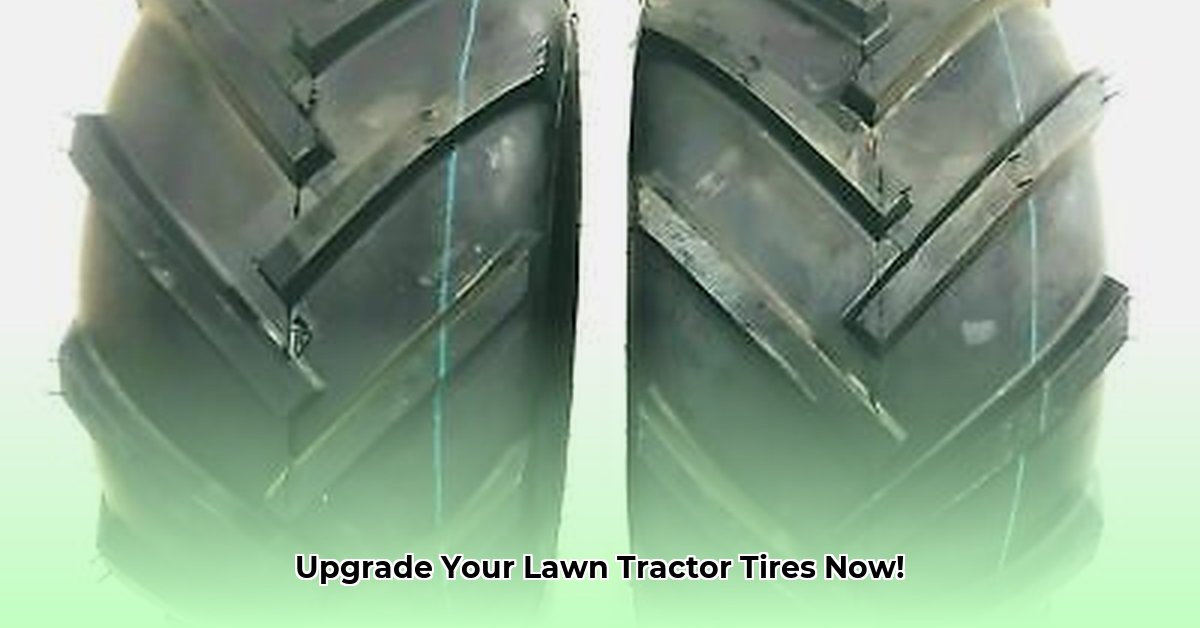
Choosing the right agricultural tires for your lawn tractor can significantly impact its performance and longevity. This comprehensive guide simplifies the selection process, helping you find the perfect tires for your needs and budget. For even more in-depth information, check out this detailed guide.
Decoding Tire Types and Sizes
Understanding tire types and specifications is the first step towards making an informed decision. Two primary types dominate the market for lawn tractors: R-1 and R-4. R-1 tires, ideal for smooth lawns, offer a balance of traction and comfort. Think of them as the "sneakers" of the lawn tractor tire world. R-4 tires, on the other hand, are the "hiking boots"—designed for rough terrain with their aggressive tread patterns, providing superior grip on uneven surfaces.
Tire size codes, often appearing as something like "18x8.50-8," might seem cryptic, but they're quite simple once you understand the structure. The "18" represents the tire's diameter (in inches), "8.50" denotes the width (also in inches), and "8" indicates the wheel rim diameter (in inches). Matching these dimensions to your tractor's specifications is essential for a safe and proper fit. Ignoring this can lead to instability and damage to your equipment.
Identifying Your Needs: Tailoring Your Tire Choice
Before diving into product reviews, consider these factors:
- Lawn Size and Terrain: A small, flat lawn has different needs than a large, hilly property. Larger lawns will benefit from more durable tires, less prone to wear.
- Usage Frequency: Regular, heavy-duty use requires more robust tires compared to occasional mowing. Heavy use may necessitate more puncture-resistant options.
- Tractor Model: Consult your tractor's manual for tire size recommendations and weight capacity limits. Overloading tires can lead to premature failure.
- Budget: While higher-priced tires generally offer superior durability, it is essential to match your needs to price point.
Choosing tires that align with your specific lawn and usage pattern ensures optimal performance and extends their lifespan.
Top-Performing Tires: A Comparative Overview
Selecting from the multitude of available tires can be daunting. The following table provides a framework for comparison (remember that prices and specific models change frequently; this is for illustrative purposes only):
| Tire Model (Example) | Price Range ($) | Pros | Cons |
|---|---|---|---|
| Tire A (R-1) | 50-75 | Excellent traction on wet grass; good overall durability | May be noisy on hard surfaces; not ideal for rough terrain |
| Tire B (R-1) | 75-100 | Longer lifespan; higher load capacity | More expensive upfront |
| Tire C (R-4) | 100-150 | Superior grip on uneven ground; rugged construction | May compact soil slightly more; potentially noisier |
Always consult online reviews for real-world feedback. Look for reviews that match your specific needs (lawn type, usage frequency etc.) to gain a holistic view. User experience adds crucial context to marketing materials.
Where to Buy: Navigating the Market
Major online retailers like Amazon offer a wide selection and often competitive pricing. However, specialty stores focusing on lawn equipment can provide valuable advice, potentially faster shipping, and greater expertise in niche product areas.
When comparing options, factor in:
- Shipping Costs: Free or low-cost shipping can offset higher prices.
- Return Policies: A lenient return policy protects you against unexpected issues.
- Customer Service: Responsive and helpful customer service can be invaluable if problems arise.
Prioritize sellers with positive feedback and transparent policies.
Installation and Maintenance: Ensuring Tire Longevity
For those comfortable with tools, tire installation is often a manageable DIY project. However, if you lack confidence, professional installation ensures proper fitting and avoids potential damage.
Regular maintenance is paramount:
- Inflation: Check and adjust tire pressure before each mowing session (typically found on the tire sidewall).
- Inspection: Regularly inspect tires for cuts, excessive wear and tear, or other damage.
- Rotation: Rotating tires periodically ensures even wear distribution across all tires.
Proper maintenance significantly prolongs tire life and improves overall performance.
Frequently Asked Questions (FAQ)
- Q: What's the difference between R-1 and R-4 tires? A: R-1 tires are designed for smooth lawns; R-4 tires are built for rough terrain.
- Q: How often should I inflate my tires? A: Before each mowing session is recommended.
- Q: How long do lawn tractor tires typically last? A: Lifespan depends on usage, terrain, and maintenance; regular inspections and proper inflation greatly extend their life.
- Q: Where can I find replacement tires? A: Online retailers, specialty stores, and some hardware stores often carry them.
This guide equips you with the knowledge to choose the ideal lawn tractor tires, enhancing your mowing experience and maximizing your equipment's lifespan. Remember that careful consideration of your individual needs coupled with thorough research will ensure a successful purchase.